How to Make Tostones (and Which Tostonera to Choose)
Step-by-step crispy tostones with green plantains, the most common mistakes, garlic mojo and mayo-ketchup, and a guide to choosing your wooden tostonera.

Few sides are as Puerto Rican as a plate of tostones: crisp outside, tender inside, with coarse salt and a little garlic mojo. They go with rice and beans, with fried fish at the beach, or on their own as a snack. They look simple, but there's technique behind them.
Here's how to make tostones step by step, the most common mistakes, and which tostonera (tostones press) to choose for your kitchen.
Choosing plantains for tostones
Tostones are made with green plantains: firm green skin, no yellow spots. Ripe plantains, with yellow or black skin, are for sweet maduros; they won't smash cleanly or get crisp. Plan on one plantain per person as a side.
To peel, cut off both ends, score the skin lengthwise without cutting into the flesh, and pry it off with your thumb or the tip of a knife. If it resists, soak it in warm water for a few minutes.
How to make tostones, step by step
- Slice the plantain into thick rounds, one to one and a half inches, straight or on a diagonal.
- First fry. Heat enough vegetable oil to cover the pieces over medium heat (about 325–350°F). Fry 3 to 4 minutes, turning, until yellow and soft inside but not browned.
- Drain and smash. Move them to paper towels. While still hot, place them one at a time on a board and press with the tostonera to about a third of their thickness.
- A dip in salted water (optional). Many families dip each smashed tostón in salted water with a crushed garlic clove. Pat dry before the second fry—water spatters in hot oil.
- Second fry. Raise the heat to medium-high (about 350–375°F) and fry 2 to 3 minutes, until golden and crisp.
- Salt and serve. Drain and sprinkle with coarse salt right away, while they're hot. Tostones are best eaten fresh.

Common tostones mistakes
- Using ripe plantains. They turn sweet and soft and break when smashed.
- Browning on the first fry. The tostón gets hard and cracks. The first fry only cooks the inside.
- Smashing them cold. The edges split. Smash them straight out of the oil.
- Oil not hot enough for the second fry. They soak up oil and turn greasy instead of crisp.
- Salting too late. Salt sticks best to hot tostones.
Garlic mojo and mayo-ketchup
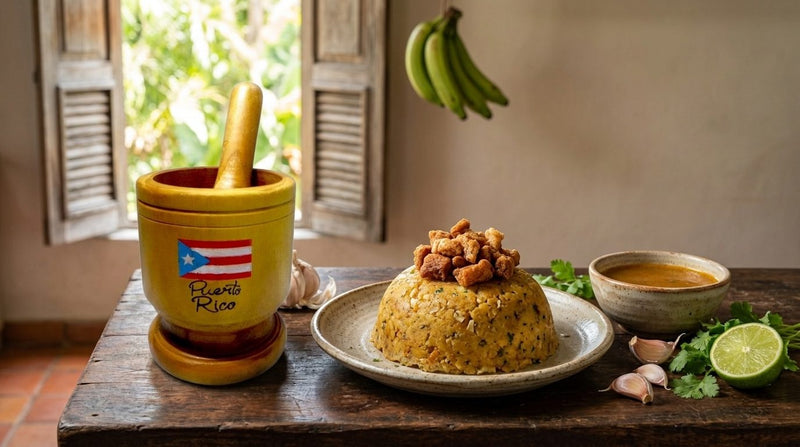
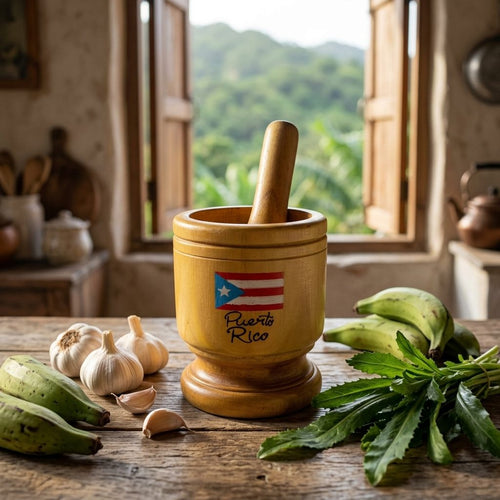
Garlic mojo: crush 4 or 5 garlic cloves with a pinch of salt, stir into half a cup of warm olive oil and, if you like, add a squeeze of lime and chopped cilantro. For crushing garlic, nothing beats a wooden pilón.
Mayo-ketchup: equal parts mayonnaise and ketchup with a touch of garlic powder. It's the tostones sauce at every roadside kiosk on the island.

Which tostonera to choose
You can smash tostones with the bottom of a plate, but a wooden tostonera presses them evenly, doesn't stick and doubles as kitchen décor. Here's what we carry:
Large carved tostonera
Our large carved tostoneras are wooden and made in Puerto Rico, with designs like the flag, the flor de maga or the Taíno sun. The wide surface smashes in one press, and the cord lets you hang it on the wall. The pick if you make tostones often.
8-inch Christmas tostonera
The Christmas tostonera is pine, engraved with designs like the Three Kings or "Feliz Navidad Boricua." Smaller and more affordable, it's a great seasonal gift or gift-exchange pick.
Tostonera and spoon set
The tostonera and spoon set pairs two matching decorated pieces, made in Puerto Rico. The showiest option for someone setting up their kitchen.
Available designs change with inventory. To care for any wooden tostonera, hand-wash with soap and water, dry right away, and never soak it or put it in the dishwasher.
Equipping a full Puerto Rican kitchen? Read our guide to Puerto Rican kitchen essentials, and for your next plantain dish, our mofongo recipe.
Tostones FAQ
What's the difference between tostones and patacones?
Same dish, different name. In Puerto Rico, Cuba and the Dominican Republic they're tostones; in Colombia, Venezuela and elsewhere, patacones.
Can you make tostones in an air fryer?
Yes, with a little spray oil and the same two-step cook. They come out less greasy, if a bit less crisp than fried.
Why are my tostones hard?
Usually from browning them too much on the first fry or slicing too thin. The first fry should leave the plantain soft inside.
Can you make tostones ahead?
Do the first fry and smash a few hours ahead, keep them covered, and save the second fry for serving time.
Featured in this guide
Shop tostoneras and kitchen essentials →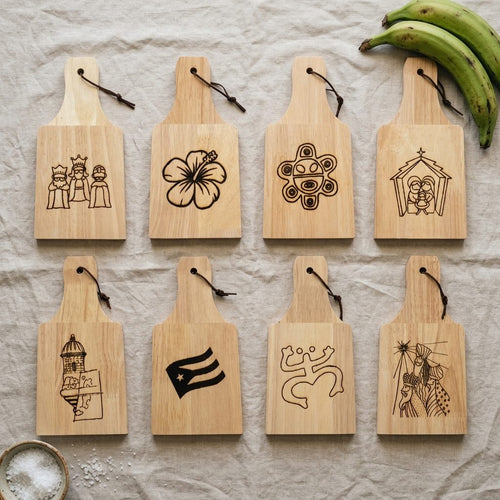


Shop this guide
The products in this article
10% off orders over $100Automatic in the online cart. No code needed.
Free shipping in Puerto RicoOn orders over $40.
50% off shipping to the U.S.To the contiguous United States.