Mofongo Recipe: How to Make Traditional Mofongo in a Pilón
The traditional Puerto Rican mofongo recipe made in a pilón, where it comes from, its most-loved variations—shrimp, carne frita, trifongo—and how to care for your pilón.

If one dish sums up Puerto Rican cocina criolla, it's mofongo: fried green plantains mashed in a pilón with garlic and chicharrón, shaped into a dome and served with broth or a criolla sauce. It's hearty, fragrant and carries a long history that connects Puerto Rico to Africa, to its Taíno heritage and to Spain.
Here's an authentic mofongo recipe, made the traditional way in a pilón, plus the most-loved variations and what you need in the kitchen to make it taste like the island.
Where mofongo comes from
Mofongo has African roots. It reached the Caribbean with enslaved Africans, who made fufu: boiled starchy vegetables mashed into a dough. In Puerto Rico the plantain was fried instead of boiled, Spanish garlic and pork were added, and it was mashed in the pilón, a tool with both Taíno and African precedents. The result is a dish now identified with the island around the world.
Mofongo ingredients
For two generous servings:
- 3 green plantains
- 4 to 6 garlic cloves
- 2 tablespoons olive oil
- 1 cup chicharrón (pork cracklings), in small pieces, or crispy bacon
- ¼ to ½ cup hot chicken broth
- Salt to taste
- Vegetable oil for frying

How to make mofongo in a pilón, step by step
- Make the mojo. In the pilón, mash the garlic with a pinch of salt into a paste. Stir in the olive oil and set aside in a bowl.
- Fry the plantains. Peel, cut into one-inch pieces and fry over medium heat (about 350°F) for 6 to 8 minutes, until golden and cooked through. Unlike tostones, they're fried once and not smashed.
- Mash in batches. Drain and, while still hot, put a few pieces in the pilón with a spoonful of mojo and a handful of chicharrón. Mash into a textured mass, not a purée.
- Adjust the moisture. If it's dry, add a splash of hot broth and keep mashing. Taste and adjust the salt.
- Shape it. Press the mixture into a small bowl or the pilón itself and turn it out onto the plate as a dome.
- Serve right away with broth around it or your favorite sauce.
Working in batches is the key: the plantain has to be hot to mash well. If it cools, the mixture turns hard and won't hold together.
Mofongo variations
Shrimp mofongo (mofongo relleno de camarones)
The coastal favorite. The mofongo is shaped with a well in the center and filled with shrimp in criolla sauce: sofrito, tomato, peppers and a splash of wine. It's also made with lobster, octopus or mixed seafood.
Mofongo with carne frita or churrasco
Fried pork chunks or grilled skirt steak on the side or on top—the quintessential roadside-kiosk mofongo.
Trifongo
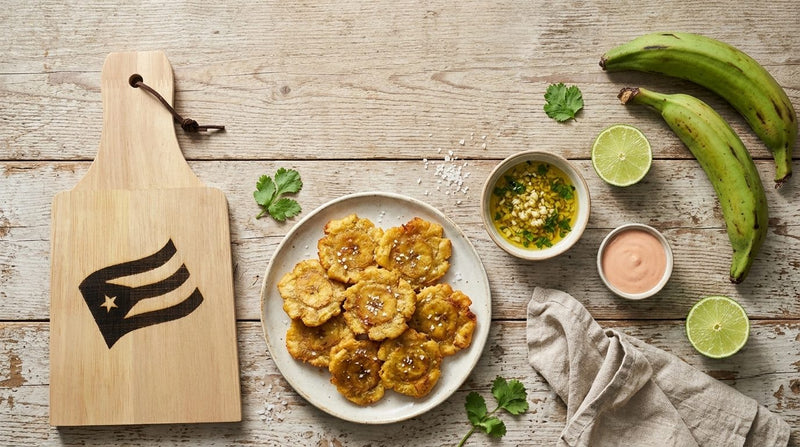
A mix of green plantain, ripe plantain and yuca. The ripe plantain adds a sweet note against the garlic.
Yuca mofongo
Made with boiled or fried yuca instead of plantain. Softer and creamier.

Why mofongo is made in a pilón
You can mash plantain with a fork, but it isn't the same. A wooden pilón compacts the mixture without turning it into purée, takes on the aroma of garlic over the years, and lets you serve the mofongo in the same vessel, as many restaurants on the island do.
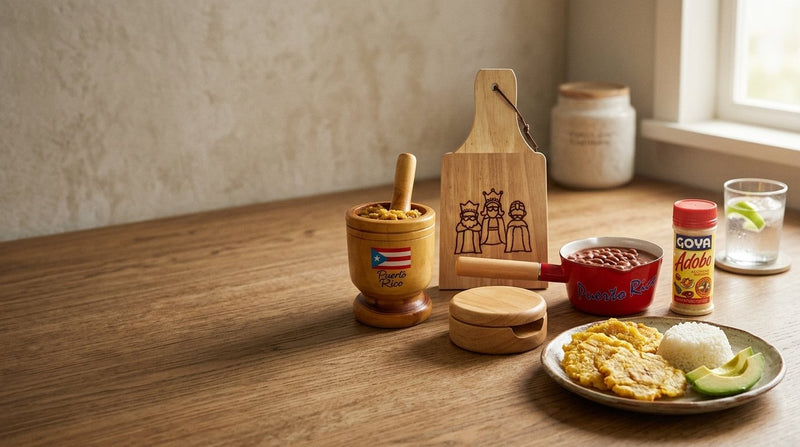
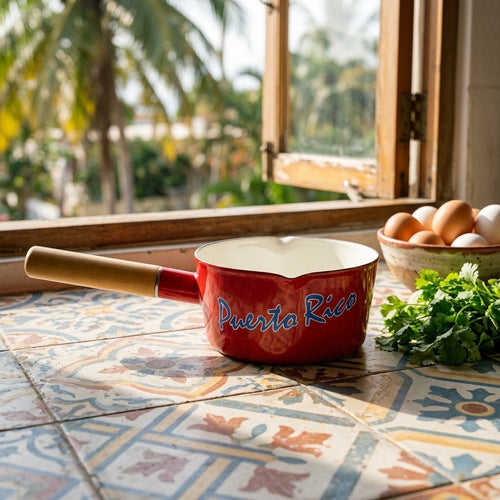
Our wooden "Puerto Rico" pilón with the flag comes with its pestle and is available in the small 5.5-inch size. It's ideal for garlic mojo and for mashing one serving at a time; for more servings, work in batches. For the shrimp sauce or warming broth, the red "Puerto Rico" saucepan has a pour spout on each side and looks as good on the stove as on the table.
To care for your pilón, hand-wash with warm water, dry right away, and now and then rub it with a little vegetable oil so the wood doesn't dry out.
Got plantains left? Try our guide on how to make tostones. And for more island dishes, see Puerto Rican kitchen essentials.
Mofongo FAQ
What is mofongo?
A Puerto Rican dish of fried green plantains mashed in a pilón with garlic, olive oil and chicharrón. It's served shaped as a dome, plain or stuffed.
What's the difference between mofongo and mangú?
Dominican mangú is made with boiled plantains and has a smooth, purée-like texture. Mofongo uses fried plantains and is firmer, with garlic and chicharrón.
Can you make mofongo without a pilón?
Yes, with a sturdy bowl and the bottom of a glass or a potato masher. The texture will be less compact.
What do you serve with mofongo?
Chicken broth, criolla sauce, garlic shrimp, carne frita or churrasco. A simple salad balances the plate.
Featured in this guide
Shop the Puerto Rican kitchen →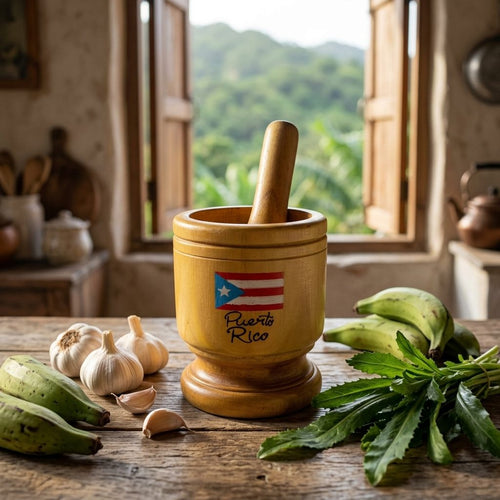

Shop this guide
The products in this article
10% off orders over $100Automatic in the online cart. No code needed.
Free shipping in Puerto RicoOn orders over $40.
50% off shipping to the U.S.To the contiguous United States.